Bound to Be Free: How Franciscan Vows and Anglican Canons Offer What the Self-Actualization Movement Cannot Deliver
There is a particular kind of exhaustion that settles over the person who has been told, repeatedly and enthusiastically, that they can be anything they choose. It is the weariness not of deprivation but of surfeit—the fatigue of a soul that has been handed an infinite menu and asked to order without knowing what it is truly hungry for. American culture has made a near-religion of unlimited potential, and its congregations are, by many measures, deeply tired.
Against this backdrop, two ancient traditions—Franciscan spirituality and Anglican canonical order—advance a proposal so unfashionable it borders on scandalous: that saying no to certain paths is not a diminishment of the self, but the very precondition of its flourishing. The gift they offer is not freedom from structure, but freedom within it.
The Myth of the Unencumbered Self
The self-actualization movement, broadly understood, draws from a mid-twentieth-century current in American psychology. Its popular descendants fill bookstore shelves and podcast queues with a consistent message: remove the obstacles, silence the critics, shed the inherited expectations, and the authentic self will emerge—unbounded and fully realized. The framework is not without its insights. Liberation from genuinely oppressive structures is a legitimate spiritual and social good.
But the movement tends to conflate all constraint with oppression. Institutional belonging, liturgical repetition, vowed commitment, canonical accountability—these are filed under the heading of limitation, as though the soul were a seedling that requires only sunlight and open air to grow without ceasing. What this framework cannot adequately explain is why so many people, having shed every external obligation, find themselves not freer but more adrift.
The Franciscan and Anglican traditions have been asking a different question for centuries. Not how do we remove limits? but which limits are life-giving, and why?
Francis and the Liberating Power of the Vow
When Francis of Assisi renounced his father's wealth in the public square of Assisi in 1206, he was not simply making a dramatic gesture. He was enacting a theology of limits as liberation. By voluntarily relinquishing the capacity to accumulate, to secure, and to claim, he was not impoverishing himself in any final sense—he was clarifying himself. The vow of poverty did not narrow his world; it focused it with extraordinary precision.
The three traditional Franciscan vows—poverty, chastity, and obedience—are, to the modern American ear, a catalog of deprivations. Each one forecloses a category of experience that contemporary culture regards as essential to full personhood: economic accumulation, sexual autonomy, and personal sovereignty. Yet Franciscan theology insists that these foreclosures are precisely what make depth possible. When you cannot own, you learn to receive. When you cannot possess, you learn to love without grasping. When you cannot command your own direction, you learn to listen for a voice that is not your own.
This is not masochism. It is, in the Franciscan understanding, a form of spiritual precision. The vow does not destroy the person; it defines the person. And definition, however much contemporary culture resists it, is what makes meaning possible. An undefined life is not a free life—it is an unwritten one.
Anglican Canons and the Architecture of Common Life
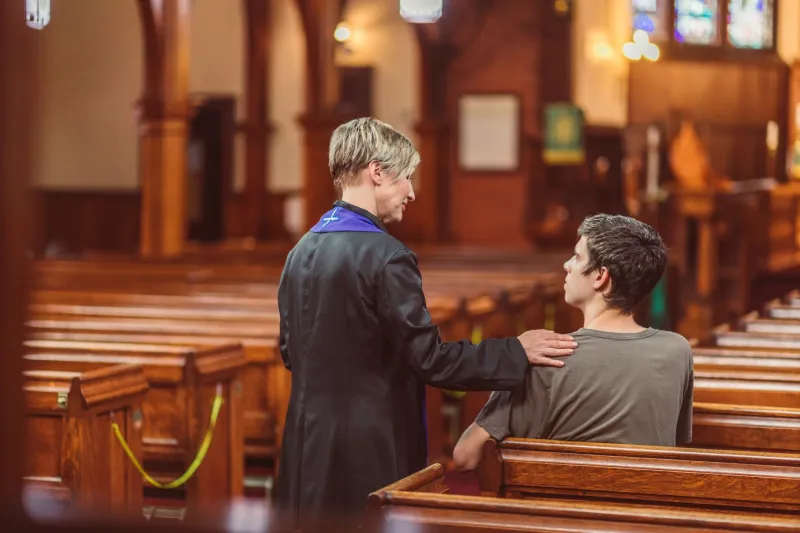
Anglicanism arrives at a related truth through a different door. Where Franciscan spirituality emphasizes the interior transformation wrought by voluntary poverty and self-surrender, the Anglican tradition has historically located much of its formative power in structure—in the canons, liturgies, and constitutional arrangements that give the community its shape.
The Book of Common Prayer, first compiled in 1549 and carried across centuries in various forms, is perhaps the most visible expression of this conviction. Its prayers are not spontaneous outpourings of individual spiritual creativity. They are inherited, shared, and—crucially—binding in a liturgical sense. The worshipper does not arrive at Morning Prayer to express whatever is personally resonant that day. They arrive to be formed by words that are larger and older than their present mood.
To many Americans, this feels restrictive. The evangelical and charismatic streams that have dominated much of US Protestant life for the past half-century have cultivated a strong preference for spontaneity in worship—the sense that authentic prayer must, by definition, arise from the unmediated interior. Prescribed liturgy can seem, from within that framework, like a cage.
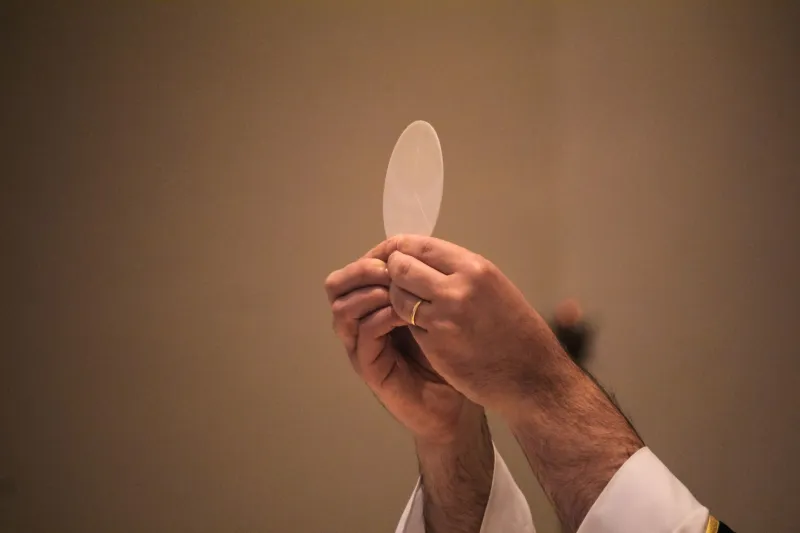
But Anglican practice has long maintained that the cage metaphor misunderstands what liturgical form actually does. The canons and the prayer book do not cage the worshipper; they train the worshipper. Like the banks of a river—which do not impede the water but give it direction and force—Anglican structure channels the spiritual life toward depth rather than diffusion. The canon that requires a priest to be ordained within a particular order, the liturgy that insists on confession before communion, the church year that moves the congregation through penitence and celebration in a rhythm not of their choosing: these are not bureaucratic obstacles. They are, in the Anglican understanding, the architecture of a common life that no individual could construct alone.
Where the Two Traditions Converge
What Franciscan vow-taking and Anglican canonical order share—despite their considerable differences in temperament and emphasis—is a common conviction that the human person is not most fully alive when all options remain open. They converge on the insight that commitment, by its nature, involves exclusion, and that this exclusion is not a tragedy to be mourned but a grace to be received.
This convergence has particular relevance for American Christians who have grown up in a spiritual marketplace that prizes choice above almost every other value. The megachurch model, at its most consumer-oriented, offers a kind of spiritual buffet: attend when convenient, disengage when the programming no longer resonates, move on when a different community seems more suited to one's present needs. The result, for many, is a faith that remains perpetually shallow—not because the individuals are spiritually incapable, but because depth requires the kind of sustained, committed engagement that only limits can enforce.
Both traditions ask the same uncomfortable question of the self-actualization movement: freedom for what? Unlimited potential is not a destination; it is a condition. What you do with it depends entirely on whether you have allowed yourself to be formed by something larger than your own preferences.
Practicing the Paradox
For US readers navigating these questions in practical terms, both traditions offer concrete entry points that do not require formal vows or ordination. The Franciscan practice of a daily examen—a structured examination of conscience that imposes a particular rhythm on the end of each day—is one such discipline. The Anglican practice of fixed-hour prayer, increasingly accessible through resources like The Divine Hours or the daily offices in the Book of Common Prayer, is another. Both practices ask the practitioner to surrender the day's agenda, however briefly, to a form that was not invented by them and cannot be revised by them.
These are small limits. But they are limits in the right direction—toward a self that is not merely self-determined, but genuinely formed.
The modern American gospel of unlimited self-actualization is not without compassion. It emerged, in part, from a genuine desire to free people from crushing and unjust constraints. But it has overcorrected. It has confused the removal of unjust limits with the removal of all limits, and in doing so, it has left many of its adherents not liberated but unmoored.
Francis of Assisi and the Anglican tradition, speaking across very different centuries and ecclesial contexts, offer a more ancient and more durable word: that the self is not found by expanding without boundary, but by choosing, deliberately and joyfully, the constraints that make it most fully itself.