Present in the Dark: How Franciscan Accompaniment and Anglican Pastoral Tradition Can Heal a Church That Has Forgotten How to Sit With Suffering
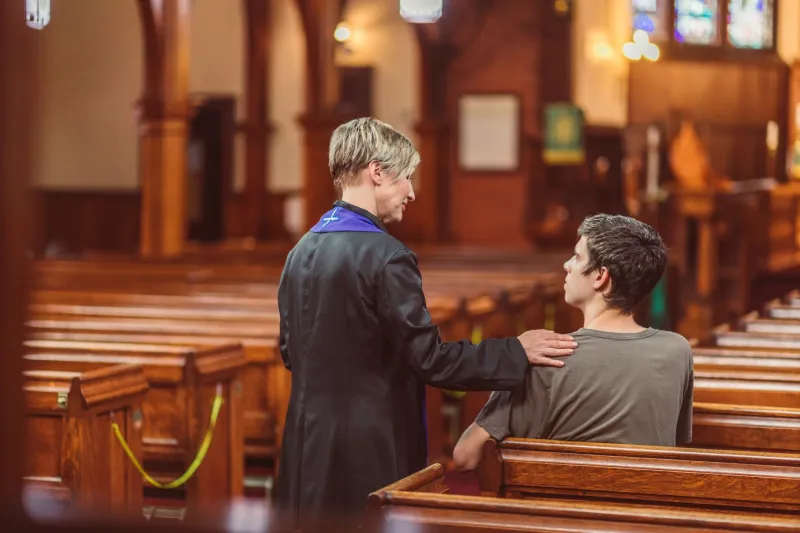
There is a moment that recurs in parish life with uncomfortable regularity. A congregant arrives on Sunday morning carrying something heavy — a diagnosis, a dissolution, a grief that has grown too large for any single conversation — and what they receive in return is a bulletin insert for a six-week support group and a well-meaning handshake. The church has not been unkind. It has simply been busy, institutionalized, and, in the deepest sense, absent.
The question pressing upon both Franciscan communities and Anglican parishes in the United States today is not whether the church cares. Most churches care enormously. The more searching question is whether contemporary Christian communities possess the spiritual and structural resources to translate that care into something genuinely transformative — something that does not merely manage suffering but accompanies it.
Two ancient traditions, one rooted in the barefoot wanderings of a thirteenth-century Italian friar and the other in the measured cadences of English liturgical life, have more to say to this question than is commonly recognized.
The Franciscan Art of Being With
Francis of Assisi did not found a counseling center. He founded a brotherhood of presence. The earliest Franciscan sources describe friars who lingered at the margins of medieval society not to deliver services but to share life with those whom the church and culture had set aside — lepers, beggars, the spiritually desolate. The Latin phrase that recurs in early Franciscan writings is esse cum, to be with. It is a deceptively simple formulation that carries enormous pastoral weight.
This tradition of accompaniment — acompañamiento in the Latin American theological idiom that Franciscan missionaries later carried across the Americas — is distinct from what we might call intervention-based care. The accompanier does not arrive with a diagnosis or a program. The accompanier arrives with time, attentiveness, and a willingness to remain. Francis himself, according to Thomas of Celano, would sit with those in spiritual anguish through the night, not speaking, simply breathing the same dark air.
Contemporary Franciscan communities, including the Third Order of the Society of Saint Francis active in many American cities, have formalized this instinct into practices of spiritual direction and what some communities call "holy listening" — a structured but unhurried form of presence in which the companion's primary discipline is restraint. The goal is not resolution but accompaniment through the valley, to borrow the psalmist's geography.
What Anglican Pastoral Tradition Brings to the Room
Anglicanism has its own deep well of pastoral wisdom, though it is sometimes obscured beneath layers of institutional habit. The office of the deacon, in classical Anglican ecclesiology, was explicitly oriented toward the suffering and marginalized — a ministry of threshold, connecting the gathered community to those beyond its comfortable boundaries. The Book of Common Prayer's rites for the visitation of the sick, for the reconciliation of a penitent, and for the ministration at the time of death are not merely liturgical formalities. They are, at their best, a structured grammar of presence — a way of bringing the whole weight of Christian tradition into a hospital room or a living room where someone is coming apart.
Anglican pastoral theology, particularly in the tradition of writers such as Herbert, Baxter, and in the American context, William Porcher DuBose, has long emphasized the parish priest as a physician of souls — someone whose authority derives not from expertise alone but from intimate knowledge of particular people in particular places. This is the tradition that produced the concept of the "cure of souls," a phrase that modern American Christianity has largely abandoned but that carries within it a profound countercultural claim: that the church's responsibility to the suffering person is not episodic but continuous, not programmatic but relational.
Where the Two Traditions Converge and Correct Each Other
The Franciscan and Anglican approaches to pastoral care are not identical, and their differences are instructive. Franciscan accompaniment tends toward the informal, the itinerant, and the affective. It privileges proximity over structure, and its genius lies in its willingness to go to where suffering lives rather than waiting for suffering to present itself at an office door. Anglican pastoral care, by contrast, tends toward the ordered, the sacramental, and the liturgical. Its genius lies in providing a form — a rite, a prayer, a structured conversation — that gives suffering a language when the sufferer has run out of words.
These two instincts are not competitors. They are complements. The Franciscan impulse corrects the Anglican tendency toward institutional distance and procedural care. The Anglican instinct corrects the Franciscan tendency toward an informality that can, over time, become unsustainable without structure to hold it.
American parishes — particularly those navigating the aftermath of the COVID-19 pandemic's social fragmentation, the ongoing mental health crisis among young adults, and the profound loneliness that sociologists now describe as epidemic — need both. They need the Franciscan willingness to show up uninvited and stay longer than is comfortable. And they need the Anglican confidence that the tradition itself carries healing resources that no individual caregiver, however gifted, can generate alone.
Concrete Practices for Parishes Ready to Move Beyond Performance
What might this synthesis look like in the life of an actual American parish? Several practices deserve serious consideration.
Trained Lay Companions. Both traditions affirm that pastoral care cannot be the exclusive province of ordained clergy. Parishes can recruit and train lay companions — not therapists, not advice-givers, but people formed in the discipline of attentive presence — who are specifically commissioned to maintain contact with those navigating grief, illness, or crisis. The Franciscan Third Order model offers a useful template for this kind of ongoing lay formation.
The Recovery of Home Visiting. The Anglican tradition of pastoral visitation has nearly vanished from American parish life, displaced by the assumption that those who need care will seek it out. Franciscan practice challenges this assumption directly. A parish that commissions regular, unhurried home visits to those who are isolated, bereaved, or spiritually struggling is making a countercultural statement about what the church believes it owes its members.
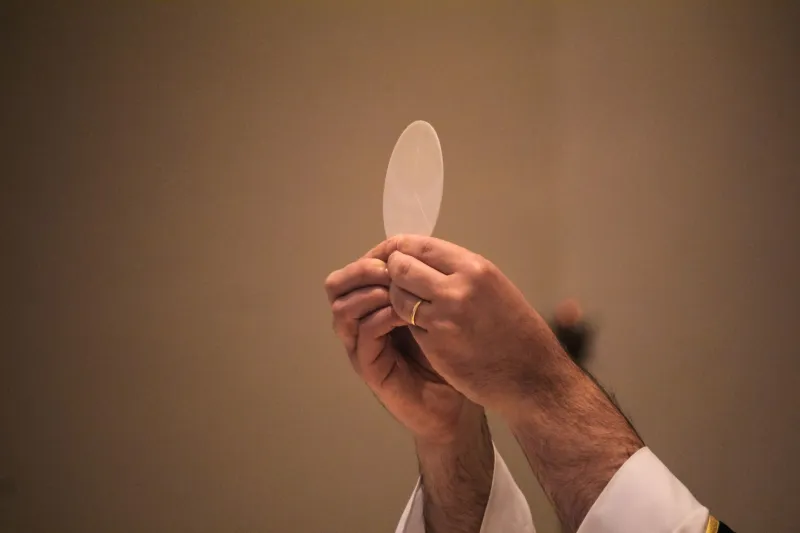
Liturgical Anchoring of Care. Anglican sacramental resources — the rite of reconciliation, healing prayer, anointing, the simple act of receiving communion in a hospital room — should be understood not as supplements to pastoral care but as its backbone. These rites give caregivers something to offer beyond their own emotional resources, and they connect individual suffering to the larger story of redemption that the tradition holds.
Circles of Presence. Some parishes have begun adapting the Franciscan practice of communal discernment into what might be called listening circles — small groups of three to five people who gather regularly around a person in crisis, not to advise but to hear. These circles are explicitly not support groups in the therapeutic sense. They are communities of witness, and their discipline is silence as much as speech.
The Deeper Wager
Underneath these practical proposals lies a theological claim that both traditions share and that American church culture persistently resists: that suffering is not a problem to be solved but a condition to be accompanied. The Franciscan who sits with a leper and the Anglican deacon who visits a prison are not, in the first instance, trying to fix anything. They are trying to ensure that no one suffers entirely alone.
In a culture that pathologizes vulnerability and rewards self-sufficiency, this is a genuinely radical witness. It is also, both traditions would insist, the most faithful imitation of the One who did not dispatch a remedy from a distance but came and dwelt among us — present in the dark, bearing the weight himself.