Flesh Made Theology: Incarnational Faith Through Franciscan Stigmata and Anglican Sacramental Practice
In September of 1224, on the rocky slopes of La Verna in the Tuscan Apennines, Francis of Assisi reportedly received the stigmata—the five wounds of the crucified Christ imprinted on his hands, feet, and side. Whatever one makes of the historical and theological complexity surrounding this event, the significance it carries for Christian spirituality is difficult to overstate. The body of a human being had become, in the most literal imaginable sense, a sacred text. The Passion of Christ was not merely remembered or symbolized in Francis's flesh; it was, his earliest biographers insisted, somehow present there.
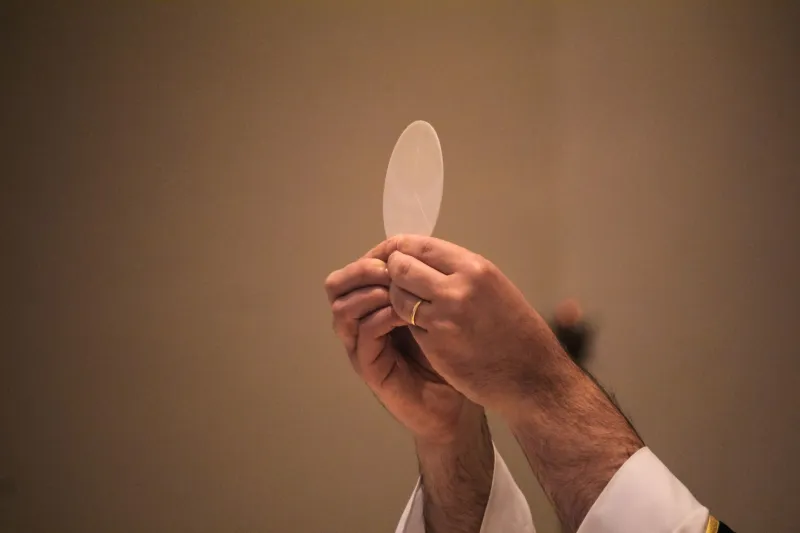
Several centuries later and in a very different ecclesiastical climate, the Book of Common Prayer would instruct Anglican worshipers to kneel, to receive bread into their hands, to drink from a common cup—insisting, through the grammar of liturgical gesture, that salvation was not a purely cognitive affair. The body bows. The tongue tastes. The knee bends. Grace arrives through matter.
These two moments—the mystic's wounded hands and the worshiper's outstretched palms—belong to different centuries, different continents, and different ecclesial worlds. Yet they share a foundational conviction that may be the most countercultural claim either tradition has to offer contemporary American Christianity: that the physical body is not a temporary inconvenience on the way to spiritual life, but the very site where spiritual life occurs.
The Body as Theological Problem in American Christianity
American Christianity has always had an uneasy relationship with embodiment. The Puritan suspicion of sensory worship, the revivalist emphasis on inward conversion experience, and more recently the migration of congregational life onto digital platforms have all contributed to a cultural habit of treating the body as spiritually peripheral. We speak of faith as belief, meaning a set of propositions held in the mind. We speak of prayer as thought directed upward. We speak of community as connection, a word that now carries more digital than physical connotation.
The consequences of this disembodiment are not merely aesthetic. When the body is removed from the center of spiritual practice, the faith community loses its most potent argument against the gnostic tendency to divide the world into sacred spirit and profane matter. It also loses one of its primary defenses against the kind of abstract ideological religion that can hold correct doctrinal positions while remaining entirely unaffected in the nerve endings, the gut, the hands.
Both the Franciscan and Anglican traditions offer resources for recovering what has been lost—resources that are, when placed in conversation with each other, mutually illuminating in ways that neither tradition fully achieves alone.
Francis and the Wounded Body as Sacred Language
The stigmata are, theologically speaking, a form of embodied Scripture. Francis had spent years meditating on the Passion with an intensity that his contemporaries found extraordinary even by medieval standards. His identification with the suffering Christ was not metaphorical in the ordinary sense; it was, as Thomas of Celano and Bonaventure both describe, a participation in Christ's suffering that gradually reshaped his physical reality.
The theological claim embedded in this narrative is significant: that sustained contemplative attention to the mystery of the Incarnation—to the fact that God chose to enter the world in a body capable of pain, exhaustion, hunger, and death—can transform the contemplative's own body into a kind of living icon. The body becomes readable. It tells a story that transcends the individual who inhabits it.
This is not an invitation to pursue physical suffering as a spiritual good in itself. The Franciscan tradition has always been careful to distinguish between the gift of the stigmata as a singular mystical grace and any kind of deliberate self-harm. What the tradition does affirm, however, is the principle underlying the event: that the body participates in the spiritual life in ways that are irreducible to the merely symbolic.
Contemporary Franciscan spirituality, as practiced in both the First Order and the many Third Order communities active across the United States, draws on this legacy not primarily through extraordinary mystical experience but through the ordinary disciplines of manual labor, care for the sick, and the physical acts of solidarity with the poor. The body is trained, in these practices, to enact what the mind believes.
Anglican Sacramental Theology and the Eloquence of Matter
Anglo-Catholic sacramental theology arrives at a similar destination by a different road. The classical Anglican understanding of the Eucharist—shaped by Cranmer's liturgical genius, refined through the Caroline Divines, and developed through the Oxford Movement's recovery of patristic sources—insists that the bread and wine of the Lord's Supper are not merely commemorative symbols. They are, in the language of Article XXVIII of the Thirty-Nine Articles, "effectual signs"—signs that accomplish what they signify.
This is a profoundly incarnational claim. It asserts that the risen Christ is genuinely present in the physical elements of the Eucharist, and that the act of receiving those elements is an act of genuine encounter with the living God. The body that eats and drinks is not a passive vessel for a spiritual transaction occurring elsewhere. It is the primary locus of the encounter itself.
The liturgical embodiment that flows from this theology is extensive. Anglican worship at its fullest expression is a thoroughly physical event: the procession of ministers through the nave, the deep bow before the altar, the exchange of the Peace through physical touch, the kneeling at the rail, the placing of bread on the tongue or in the open hand. Each of these gestures carries theological content. Each of them insists, in the language of action rather than proposition, that God is met in and through the physical world.
The American Episcopal Church's current prayer books and supplemental liturgical resources have, in various ways, both preserved and occasionally diluted this embodied inheritance. The recovery of more ancient postures—kneeling, genuflection, the signing of the cross—represents, in many congregations, not mere aestheticism but a deliberate re-education of the body in the grammar of incarnational faith.
Convergence and Contemporary Application
When these two streams of embodied spirituality are brought into explicit conversation, several practical applications emerge for American faith communities navigating the peculiar spiritual conditions of the present moment.
The first concerns the practice of liturgical formation. Both traditions suggest that the body must be taught, repeatedly and through habitual practice, to enact the faith it professes. This means that liturgical formation cannot be reduced to intellectual instruction about the meaning of ritual gestures. The gestures themselves must be practiced until they become natural—until the body knows, in its own language, what the mind has been taught. For many American congregations accustomed to informal worship styles, this represents a genuine countercultural commitment.
The second concerns the ministry of presence. The Franciscan emphasis on physical accompaniment—on being bodily present with those who suffer rather than managing their suffering from a comfortable distance—finds a natural complement in the Anglican theology of pastoral visitation and the sacramental ministry to the sick. Both traditions insist that there are dimensions of spiritual care that cannot be delivered through a screen.
The third, and perhaps most theologically generative, concerns what might be called the ascetical imagination. Both traditions invite their practitioners to regard the physical sensations of daily life—hunger, fatigue, the touch of another person, the smell of incense or bread—as potential sites of encounter with the holy. This is not pantheism. It is the logical extension of the Incarnation: if God entered the world in a body, then the world of bodies is permanently, irreversibly theological.
Reclaiming the Flesh in an Age of Screens
American Christianity faces a crisis of embodiment that predates but has been dramatically accelerated by the migration of congregational life onto digital platforms. Online worship, for all its genuine pastoral value in specific circumstances, cannot replicate the irreducibly physical encounter of gathered bodies sharing bread, exchanging peace, and kneeling together before a common mystery.
The Franciscan and Anglican traditions, each in its own register, offer a coherent and historically grounded resistance to this disembodiment. They remind us that faith is not primarily a set of ideas held in the mind but a way of inhabiting the body—a discipline of attention, gesture, and physical solidarity that trains the whole person, nerve endings included, in the knowledge of God.
Francis's wounds and the Anglican altar are, in this light, not merely historical curiosities or denominational distinctives. They are invitations—addressed with equal urgency to every American Christian who has ever wondered why the faith that seems so alive in the mind feels so distant in the chest—to reclaim the body as the first and most immediate theater of divine encounter.