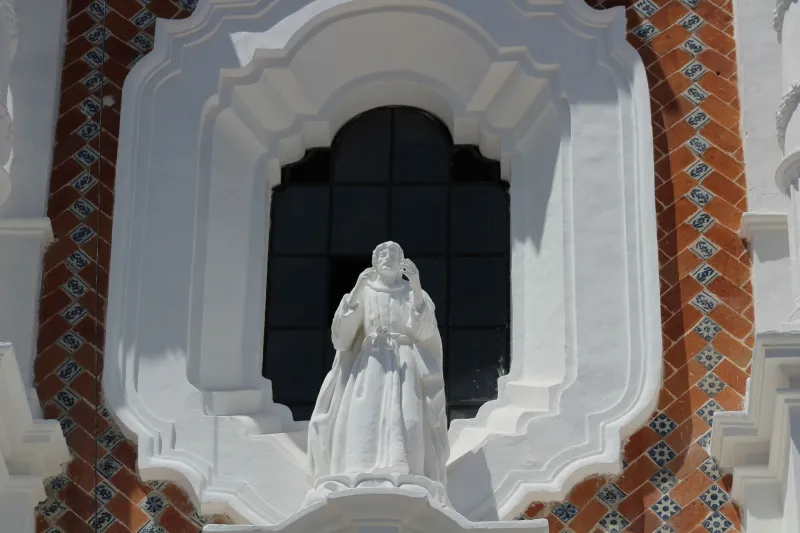
Brother Sun, Sister Earth: How Anglican and Franciscan Traditions Are Weaving a Common Theology of Creation Care
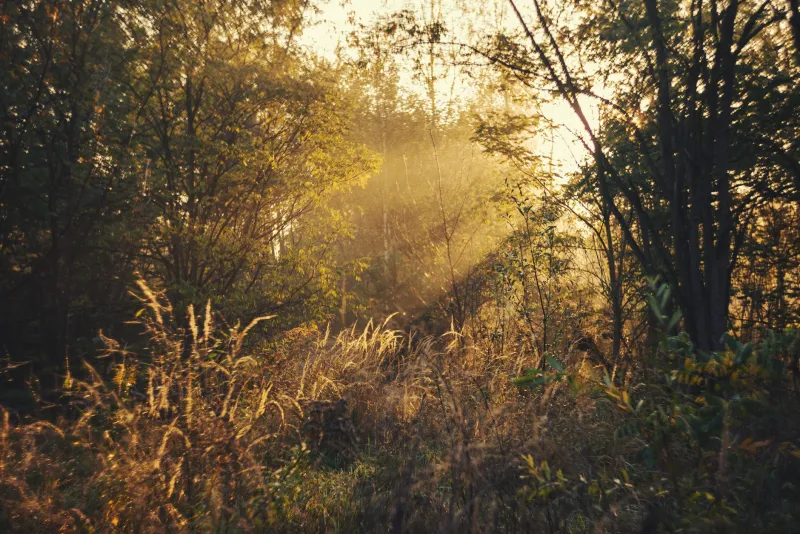
On a September morning in Appalachia, a small Episcopal congregation gathered not in their sanctuary but on the banks of a creek that had, within living memory, run clear and cold before mountaintop removal mining reshaped the watershed upstream. Their priest, a member of the Third Order of the Society of Saint Francis, led them in a liturgy drawn partly from the Anglican tradition's newly developed creation season resources and partly from Francis of Assisi's Canticle of the Creatures — that luminous thirteenth-century hymn in which the sun is praised as brother, the moon and stars as sisters, and the earth itself as a mother who sustains and governs.
The gathering was, in one sense, entirely local: a particular community responding to a particular ecological wound in their particular corner of the country. In another sense, it was a small expression of something much larger — a convergence between two ancient Christian streams that is quietly reshaping how American faith communities understand their responsibility toward the natural world.
A Theology Written in Feathers and Soil
To understand why Franciscan spirituality and Anglican creation theology find such natural resonance with one another, it helps to begin not with institutional statements but with prayer. Francis of Assisi's relationship with the created world was not, at its core, an environmental policy position. It was a mystical apprehension — a perception, born of his radical poverty and his contemplative intimacy with the Gospel, that all creatures share a common origin in God and therefore stand in genuine kinship with one another.
The Canticle of the Creatures, composed sometime around 1224 near the end of Francis's life, is not merely poetic nature appreciation. It is a theological document that refuses the sharp boundary between the human and the nonhuman, between the sacred and the natural. When Francis addresses the sun as Brother and the earth as Sister Mother, he is not being whimsical. He is articulating a vision of creation as a family of praise — a community of beings whose shared dignity derives from their shared Creator.
This vision carries profound ecological implications. If the mountain creek and the migratory warbler and the coastal wetland are not merely resources or scenery but participants in a community of praise to which human beings also belong, then their degradation is not merely an environmental problem. It is a spiritual one. It is a kind of sacrilege.
The Anglican Communion Finds Its Environmental Voice
Anglicanism has arrived at similar conclusions through somewhat different pathways. The tradition's sacramental theology — its conviction that material things can be genuine vehicles of divine grace — has always contained the seed of a robust creation theology, even when that seed lay dormant beneath layers of anthropocentric assumption. The recovery and development of that seed has accelerated considerably in recent decades.
The Anglican Communion's 2016 commitment to address climate change as a matter of faith and justice, the establishment of the Season of Creation as a liturgical observance across many Anglican provinces, and the increasingly explicit language of ecological responsibility in Episcopal Church resolutions have moved creation care from the margins to something approaching the center of Anglican ethical reflection. The Episcopal Church's own environmental network and the work of bodies like the Anglican Communion Environmental Network have provided both theological grounding and practical frameworks for congregational engagement.
What is striking, for those attentive to the history of Christian spirituality, is how closely this emerging Anglican ecological theology echoes the Franciscan intuitions that preceded it by eight centuries. Both traditions speak of creation as gift rather than possession, of human beings as stewards rather than owners, and of ecological destruction as a moral and spiritual failure rather than merely a policy concern.
Voices from the Ground
The Rev. Canon Sarah Whitmore, an Episcopal priest serving a congregation in the Pacific Northwest and a professed member of the Third Order of the Society of Saint Francis, describes the convergence in practical terms. "When I'm leading our creation care ministry," she explains, "I'm drawing on both streams constantly. The Anglican liturgical calendar gives us the Season of Creation as a structured time of ecological reflection. The Franciscan tradition gives us the Canticle, gives us the image of Francis preaching to the birds, gives us a whole spirituality of attentiveness to the nonhuman world. They reinforce each other in ways that feel genuinely organic rather than forced."
Fr. Miguel Sandoval, a Franciscan friar who has worked extensively with Episcopal and Anglican communities in the American Southwest on water justice issues, points to the common theological grammar as a practical asset. "When I'm in conversation with Anglican clergy and laypeople about the Rio Grande watershed or the drought conditions affecting indigenous communities, we don't have to spend a lot of time establishing that this is a spiritual matter," he notes. "The shared commitment to creation as sacred — even if we arrive at it through slightly different routes — means we can move more quickly to the hard work of discernment and action."
Practical Convergences for American Communities
For US faith communities seeking to weave these two traditions together in concrete ministry, several entry points present themselves with particular clarity.
Liturgical integration offers an accessible beginning. The Season of Creation, observed from September 1 through the Feast of Saint Francis on October 4, provides a natural annual frame within which Franciscan creation spirituality and Anglican environmental theology can be woven together in worship. Incorporating the Canticle of the Creatures alongside traditional Anglican collects and canticles, or designing outdoor liturgies that bring the worshiping community into direct relationship with local ecosystems, can shift the congregation's ecological imagination in ways that purely programmatic approaches rarely achieve.
Formation and education represents another vital layer. Study programs that draw on Franciscan texts — the Canticle, the writings of Bonaventure on creation, contemporary Franciscan ecological theologians like Ilia Delio — alongside Anglican environmental theology and the broader tradition of Christian nature mysticism can equip congregations to think theologically about ecological questions rather than simply importing secular environmentalism into a Christian frame.
Community action grounded in shared theological conviction tends to be more sustained and more resilient than action driven by political urgency alone. Congregations that understand creek restoration or urban tree-planting or advocacy for environmental justice as expressions of their Franciscan-Anglican vocation to honor the sacred dignity of creation are drawing on a motivation that does not depend on electoral cycles or news cycles.
The Urgency Beneath the Beauty
It would be a pastoral failure to dwell only on the beauty of this theological convergence without acknowledging the urgency that surrounds it. The ecological crises confronting the United States — intensifying wildfire seasons in the West, accelerating coastal erosion in the Southeast, drought conditions straining agricultural communities across the Great Plains, and the disproportionate environmental burdens carried by low-income and minority communities in every region — are not abstract theological problems. They are immediate human and ecological realities demanding response.
Francis of Assisi composed the Canticle of the Creatures while he was gravely ill, nearly blind, and in considerable physical pain. He wrote it as an act of praise in the face of suffering — his own and the world's. There is something in that context that speaks directly to the present moment. The work of creation care, for communities formed by Franciscan and Anglican spirituality alike, is not the work of an optimistic moment. It is the work of faithful witness in a difficult one.
Brother Sun still rises. Sister Earth still turns. The question these two traditions place before American faith communities is whether those who have been formed to see creation as sacred will act accordingly — not only in the beauty of September liturgies by a mountain creek, but in the harder and more costly choices that genuine ecological faithfulness requires.