Learning to Let Go: How Franciscan Memento Mori and Anglican Liturgical Endings Teach Us to Grieve What Is Passing Away
There is a particular kind of spiritual vertigo that comes from never quite finishing anything. Americans know it well. A loved one dies, and within forty-eight hours the condolence cards have been replaced by algorithmic recommendations for grief podcasts. A friendship quietly dissolves, and we console ourselves by leaving the contact in our phones, the thread unarchived, the door perpetually and meaninglessly ajar. A season of life ends — a job, a marriage, a child's departure for college — and rather than standing still long enough to mark the threshold, we scroll forward, chasing the next thing before the last thing has been properly buried.
This is not merely a cultural failure of attention. It is, at its root, a theological problem. And two ancient traditions — Franciscan and Anglican — have long understood that the refusal to honor endings is a refusal to trust the God who governs time.
The Franciscan Art of Holy Dying
Francis of Assisi called death his sister. That phrase, lifted from the Canticle of the Creatures, is often quoted as a piece of medieval poetry and just as quickly set aside. But for Francis and the tradition he founded, the intimate naming of death was not a poetic flourish. It was a spiritual discipline — one that shaped how Franciscans related to everything they held.
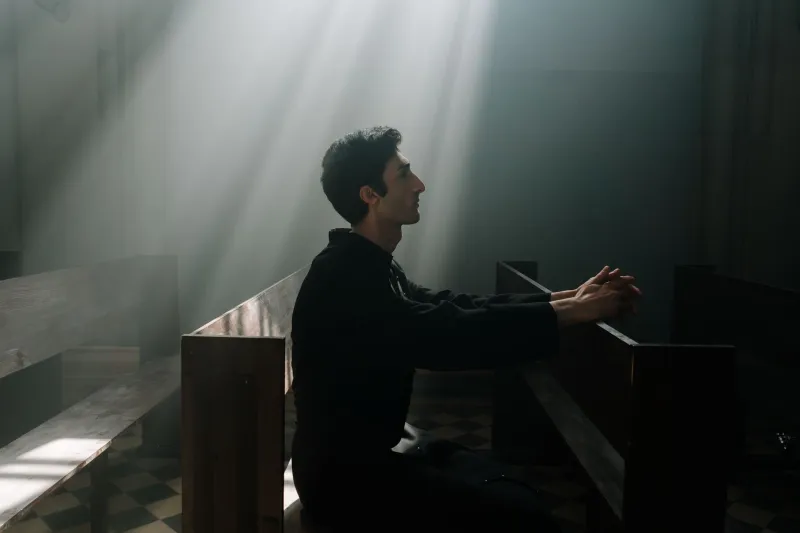
The memento mori tradition within Franciscan spirituality — the deliberate, regular contemplation of one's own mortality — was never intended to produce morbidity. Its purpose was precisely the opposite: to loosen the grip of attachment so thoroughly that each moment, each relationship, each created good could be received as gift rather than grasped as possession. When you know that you will one day release everything, you learn to hold things differently. Lightly. Gratefully. With open hands.
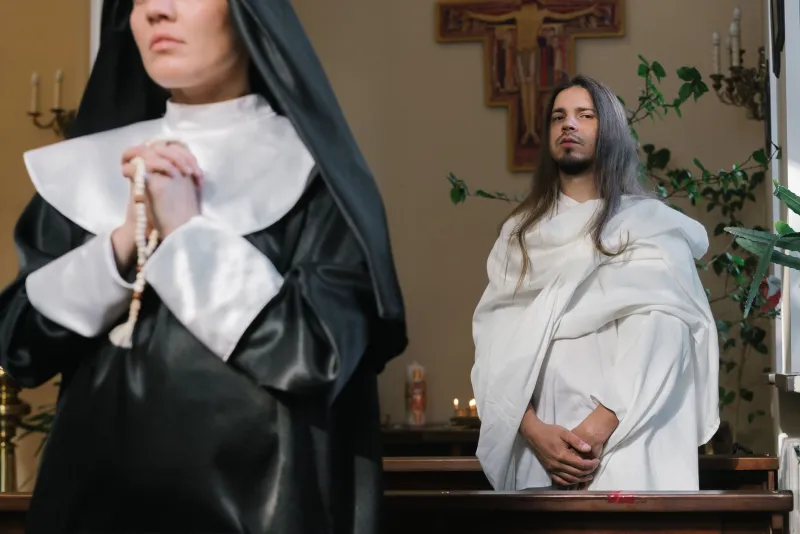
This is why Franciscan poverty was never simply about the absence of material goods. It was about the cultivation of a particular interior posture — one that could say goodbye without bitterness, because it had never confused temporary stewardship with permanent ownership. The friar who owns nothing loses nothing. The soul trained in detachment is, paradoxically, the soul most capable of genuine love, because it loves without the distortion of clinging.
For contemporary Americans steeped in a consumer culture that promises to preserve everything — photographs, relationships, youth, relevance — the Franciscan invitation to practice holy detachment is not merely countercultural. It is, in the most literal sense, counter-formative. It asks us to be shaped by a different story: one in which endings are not failures, but thresholds.
Anglican Liturgy and the Theology of Closure
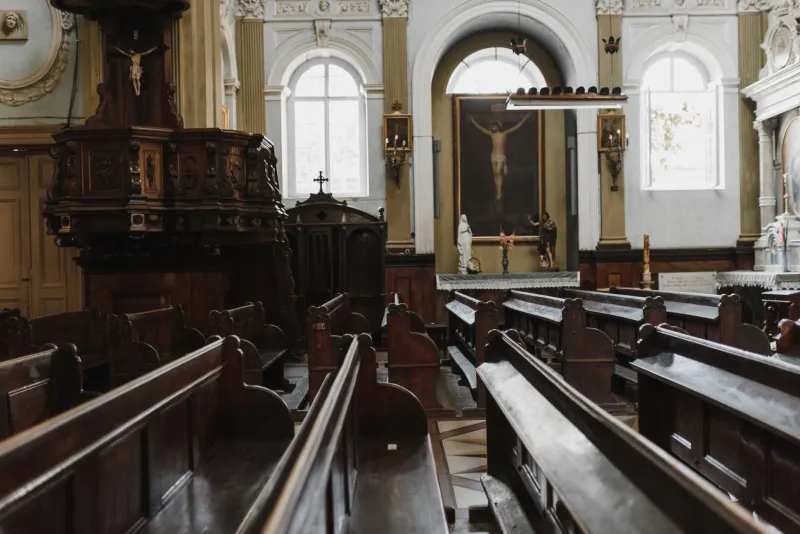
If Franciscan spirituality addresses the interior posture of the one who must let go, Anglican liturgical tradition addresses the communal and embodied practice of marking endings well. The Anglican calendar is, among other things, a sustained education in how to conclude.
Consider the movement of the liturgical year. Advent does not merely introduce Christmas; it first insists on a season of waiting, of sitting with longing and incompletion. Lent does not rush toward Easter; it demands forty days of honest reckoning with mortality and failure. And the season after Pentecost — that long, green, ordinary stretch of Sundays that Americans often find liturgically unremarkable — builds toward its own quiet conclusion in the feast of Christ the King, a celebration that dares to name history's final destination before the whole cycle begins again.
This is not accidental. The framers of Anglican liturgical practice understood, drawing deeply from both Catholic and Reformed streams, that human beings require structured endings in order to remain spiritually healthy. The Daily Office, with its morning and evening prayers, provides two closures every single day — a morning that begins with intention and an evening that consciously releases what the day has held. Compline, the final prayer of the night, contains perhaps the most direct liturgical act of surrender in the entire tradition: Into your hands, O Lord, I commend my spirit.
These are not merely beautiful words. They are practiced habits of release. And habits, repeated over years and decades, form the soul.
What Endless Scrolling Has Stolen From Us
The digital environment in which most Americans now spend the majority of their waking hours is structurally opposed to endings. Social media feeds do not conclude; they refresh. Streaming platforms are engineered to begin the next episode before the credits of the previous one have finished rolling. Group chats persist indefinitely. Emails from a decade ago sit in our inboxes alongside messages from this morning, all of it present, none of it past.
The psychological cost of this architecture is becoming increasingly well documented. Therapists report patients who struggle to process grief because the digital traces of the deceased — Instagram accounts, text threads, voicemails — make it impossible to experience the loved one as truly gone. Researchers studying decision fatigue and attention fragmentation consistently find that the inability to mark endings contributes to a pervasive sense of incompletion, a background hum of unfinished business that slowly exhausts the soul.
The church has not been immune. American congregations have largely absorbed the ambient culture's allergy to closure. Pastors avoid preaching on death. Liturgical seasons are flattened into a generic contemporary worship aesthetic that treats every Sunday as essentially equivalent. Grief ministries, where they exist at all, are measured in weeks rather than the seasons that genuine mourning requires.
The Counter-Cultural Practice of Marking Endings
What both Franciscan and Anglican traditions offer, in their different registers, is a set of practices capable of interrupting this pattern — not by retreating from the modern world, but by insisting, within it, that endings deserve to be honored.
For congregations willing to receive this inheritance, the implications are practical as well as theological. It might mean recovering the full liturgical calendar in a culture that wants to jump from Palm Sunday to Easter without the darkness of Holy Saturday. It might mean creating communal rituals for the endings that American life generates in abundance — the retirement, the divorce, the graduation, the death of a friendship — moments that our secular culture marks awkwardly, if at all.
It might mean, at the individual level, recovering something like the Franciscan practice of the daily examen: a deliberate, brief review of the day that names what is being released before sleep claims it. It might mean learning, in the Anglican idiom, to pray Compline seriously — not as a quaint historical curiosity, but as a genuine nightly act of surrender.
None of this is easy in a culture that has made the avoidance of endings into something approaching a civic religion. But the two traditions that meet on this platform have always understood that difficulty is not a reason to abandon a practice. It is frequently a sign that the practice is necessary.
The Freedom on the Other Side
Francis of Assisi, by most accounts, died well. He asked to be laid naked on the ground, stripped of the habit that marked his vocation, so that he might meet death as he had tried to live — with nothing between himself and God. It was a final, deliberate act of release: an ending honored with full intention.
The Anglican tradition, at its best, has always known that the liturgy's purpose is to prepare us for precisely this. Every Compline is a rehearsal for the last night. Every conclusion of a liturgical season is a small training in how to let a good thing end without grasping after it.
In an age that scrolls endlessly forward, these traditions together extend an ancient and urgent invitation: stop. Mark what is passing. Name what you are releasing. Trust the God who governs endings as surely as beginnings. And discover, as generations of Franciscan and Anglican Christians have discovered before us, that the willingness to let go is not the defeat of love. It is, very often, love's deepest expression.