Against the Clock: How Franciscan Hours and the Anglican Calendar Resist the Gospel of Perpetual Productivity
There is a particular kind of exhaustion that has settled over the American church, and it does not come from doing too little. It comes from doing everything too fast. Sermon series are designed for maximum impact in minimum time. Discipleship programs promise spiritual maturity in eight weeks. Growth is measured in attendance metrics updated monthly, sometimes weekly. The language of efficiency—borrowed wholesale from the corporate world—has so thoroughly colonized congregational life that many believers can no longer distinguish between spiritual depth and spiritual productivity.
Into this environment, two ancient traditions arrive not with a faster method but with a slower one. The Franciscan practice of the Divine Office and the Anglican observance of the liturgical year share a common conviction: that the soul is not a project to be completed but a creature to be formed, and that formation moves at a pace the modern world finds genuinely scandalous.
The Hours as Interruption
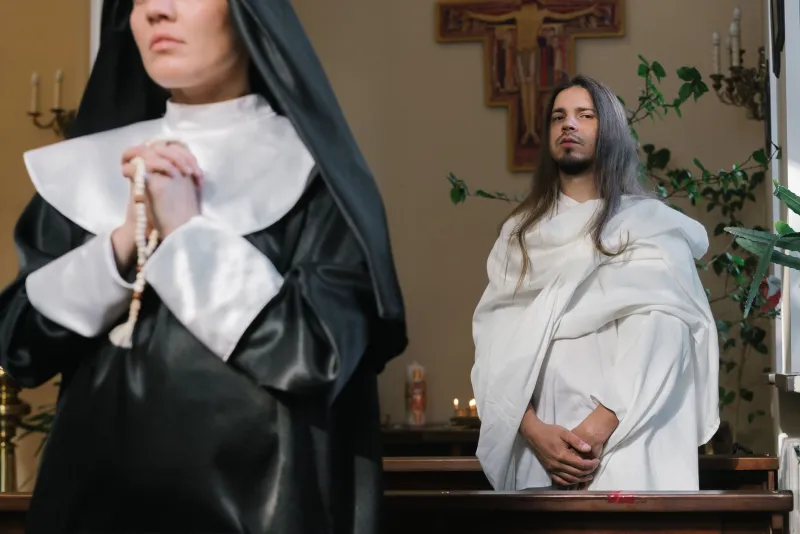
When Francis of Assisi gathered his first brothers in the fields outside Assisi in the early thirteenth century, he did not give them a strategy. He gave them a rhythm. The Franciscan tradition inherited from the broader monastic world the practice of praying the Divine Office—fixed hours of prayer distributed across the entire day, from Lauds at dawn through Compline at nightfall. These were not optional spiritual supplements. They were the architecture of the day itself.
What made this practice so radical then, and what makes it so countercultural now, is its fundamental indifference to whatever else is happening. The Office does not ask whether you are in the middle of something important. It does not wait for a convenient pause in your schedule. It arrives at its appointed hour and invites—indeed, expects—interruption. The friar in the field stops. The sister at her desk closes her laptop. The lay associate sets down the task. The hour has come.
In contemporary American life, this kind of interruption is nearly unthinkable. We have built entire industries around the elimination of interruption. Productivity culture treats the undivided attention span as a scarce and precious resource, something to be protected from distraction at all costs. The Franciscan hours do not merely tolerate distraction from productivity; they institutionalize it. They insist, seven times a day, that prayer is not the interruption of real life but the frame within which real life finds its meaning.
For American Christians shaped by a culture that prizes unbroken momentum, recovering even a modest version of this practice—morning prayer, a midday pause, evening reflection—can feel less like spiritual enrichment and more like resistance training. That discomfort is, perhaps, precisely the point.
The Year as Teacher
The Anglican tradition approaches the problem of speed from a different but complementary direction. Where the Franciscan hours structure the day, the Anglican liturgical calendar structures the year. Advent, Christmas, Epiphany, Lent, Holy Week, Easter, Pentecost, Ordinary Time—this ancient cycle does not merely organize worship. It makes a claim about how long formation actually takes.
Consider what the calendar refuses to do. It refuses to let Christmas arrive before Advent has run its full course of expectant waiting. It refuses to rush from Palm Sunday to Easter without passing through the particular darkness of Maundy Thursday and Good Friday. It refuses to skip the long, unhurried stretch of Ordinary Time, those green weeks between Pentecost and Advent when nothing dramatic is happening liturgically and the church is simply, quietly, growing.
This refusal is deeply countercultural in an American context where the retail calendar has largely swallowed the sacred one. Christmas decorations appear in October. Lent is treated as an optional personal discipline rather than a communal journey. The resurrection is celebrated for a single Sunday morning rather than the fifty days of Eastertide the tradition actually prescribes. The church has largely accepted the culture's timeline, and in doing so has inadvertently agreed that transformation can be compressed, that waiting is waste, and that the slow work of the Spirit is less important than the immediate emotional payoff.
Anglican liturgical practice, at its most faithful, pushes back against this compression. The seasons do not merely commemorate events in the life of Christ; they draw the worshipper into a repeated, deepening encounter with those events over years and decades. A person who has observed Lent faithfully for thirty years has not simply repeated the same experience thirty times. They have been slowly, almost imperceptibly, shaped by it. The calendar is not a program. It is a long apprenticeship.
What Slowness Actually Costs
It would be dishonest to commend the slow path without acknowledging what it requires. Both the Franciscan hours and the Anglican calendar demand something that contemporary American culture has made genuinely difficult to give: sustained, repeated, non-instrumental attention.
The hours ask you to stop what you are doing, not because you have finished, but because the hour has come. The calendar asks you to observe seasons that may not match your emotional state, to fast when you do not feel penitent, to celebrate when you do not feel joyful, to wait when you want to arrive. These practices make no promises of immediate return. They do not offer a measurable outcome at the end of the fiscal quarter. They ask for a kind of trust that is increasingly rare: trust that the practice itself is the formation, that showing up again and again, season after season, hour after hour, is not preparation for something more important but is, in fact, the thing itself.
This is the deeper scandal. American Christianity has become deeply uncomfortable with practices that cannot be evaluated for effectiveness on a short timeline. We want to know whether the program worked. The Franciscan and Anglican traditions answer that question with one of their own: worked toward what, exactly, and by whose measure, and over how long a span of time?
Recovering the Long View
None of this is to suggest that Franciscan and Anglican communities are immune to the pressures of acceleration. They are not. Many parishes have quietly abandoned the full observance of the Daily Office. Many friaries have compressed their prayer rhythms under the weight of pastoral demands. The temptation to modernize, to streamline, to make the ancient practices more accessible by making them shorter, is real and not always wrong.
But the traditions themselves carry a corrective. When the pace of parish life begins to feel indistinguishable from the pace of the surrounding culture, the Office and the calendar are there—not as nostalgic artifacts but as living structures—ready to reassert their ancient, inconvenient claim: that you are not as far along as you think, that there is more Advent still to wait through, that the hour of prayer has arrived whether or not you are ready, and that the God who made time is not in a hurry.
For American believers who have absorbed the acceleration gospel without quite realizing it, that claim is not merely a spiritual comfort. It is a form of liberation.