Rooted or Restless: How Franciscan Wandering and Anglican Parish Life Challenge Each Other's Assumptions About Belonging
There is a phrase theologians sometimes employ — the scandal of particularity — to describe the audacious Christian claim that the eternal God entered history in one specific body, in one specific province, at one specific moment. It is a scandal because particularity offends the universalizing instinct. We prefer our truths to be portable, our commitments comfortably transferable. The same instinct that made the Incarnation theologically inconvenient makes genuine ecclesial belonging genuinely difficult in contemporary American life.
Both the Franciscan and Anglican traditions have wrestled with this discomfort for centuries, though they have done so from remarkably different postures. Franciscans began as wanderers. Anglicans began as settlers. And the friction between those two starting points illuminates something essential about the crisis of belonging that is quietly dismantling congregational life across the United States.
The Friar Who Would Not Stay
Francis of Assisi did not found a parish. He founded a movement, and the movement moved. The early friars minor were, by design, itinerant — their poverty not merely material but spatial. They were to own no house, claim no territory, and resist the institutional gravity that pulls religious communities toward permanence and self-preservation. The road was their cloister. The universal Church was their diocese.
This was, in its original form, a profound theological statement. The friar's refusal to be domesticated by any single locale was a witness to the Kingdom's own refusal to be contained. Francis understood that the Church's mission overflows every parish boundary, that the Gospel has legs and must use them. His followers were to embody that restlessness as a form of evangelical freedom.
Yet this freedom carried a cost that Francis himself may not have fully reckoned. A community perpetually on the move is a community perpetually at the surface of things. Deep local knowledge — the kind that comes from burying your neighbors, baptizing their children, and showing up to the same potluck for twenty years — is precisely what itinerancy forecloses. The friar knows everyone briefly and no one thoroughly. He is, by vocation, a stranger.
In twenty-first-century America, that vocation has become democratized in ways Francis could not have anticipated. The average American moves more than eleven times in a lifetime. Congregations in major metropolitan areas report that a significant portion of their membership has attended for fewer than three years. We have, as a culture, become friars without the theological framework to make sense of our restlessness. We wander, but we do not witness. We move on, but we do not move toward.
The Parish That Would Not Move
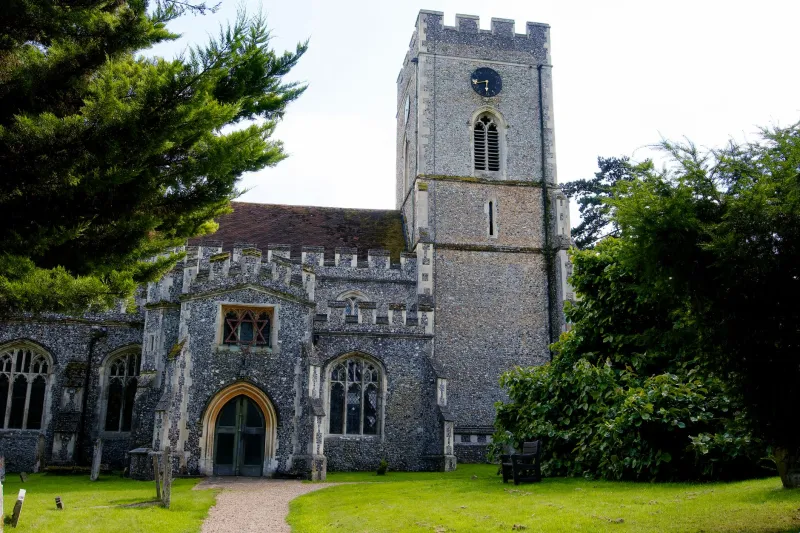
Anglicanism, by contrast, was built on the assumption of staying. The parish system — inherited from medieval England and transplanted, imperfectly but persistently, into American Episcopal and Anglican life — is premised on geography. The parish church exists to serve the people within its bounds, whether or not those people have chosen it, whether or not they particularly want it. The rector is, in theory, the pastor of the entire neighborhood, not merely of the congregation.
This is its own form of theological radicalism. The parish refuses to become a voluntary association of the like-minded. It insists on being the Church of a place rather than the Church of a preference. In doing so, it makes a counter-cultural claim: that Christian community is not assembled from affinity but given by geography, by accident, by Providence.
The Book of Common Prayer reinforces this ecclesiology at every turn. Its prayers are public and corporate, not private and customized. Its liturgical calendar tethers the worshiper to a rhythm larger than personal spiritual appetite. Its very architecture — the fixed altar, the immovable font — communicates that this community intends to remain.
Yet the Anglican parish model carries its own vulnerabilities, particularly in the American context. What was designed for a society of limited mobility can become, in a mobile society, a form of institutional insularity. Parishes that define themselves primarily by their rootedness risk mistaking continuity for faithfulness, tradition for truth. The pew that has held the same family for four generations is a beautiful thing; it becomes a problem when newcomers sense, correctly, that they are guests in someone else's inheritance.
What Each Tradition Owes the Other
The Franciscan critique of Anglican parish life is not difficult to articulate: stability can calcify into exclusivity. When a congregation's identity is primarily constituted by its history, its architecture, its particular liturgical customs, and its long-tenured families, it has — however unintentionally — built a home that feels less like a welcome than a museum. The friar's instinct to travel light is, in part, an instinct to remain evangelically available, unburdened by the accumulated weight of institutional self-regard.
The Anglican critique of Franciscan itinerancy is equally pointed: a faith that never stays long enough to be accountable is a faith that never fully incarnates. The Kingdom of God is not only announced; it is embodied, and embodiment requires duration. You cannot love a neighborhood you have not learned. You cannot serve a community you have not joined. The parish's insistence on staying is, at its best, a form of solidarity — a refusal to treat the local as merely provisional.
Both critiques are, in their essence, Christological. The Incarnation was particular — Jesus was from Nazareth, not from everywhere — but it was also mobile. He walked from town to town, healed strangers, crossed ethnic and religious boundaries with apparent indifference to propriety. He was simultaneously rooted in Jewish tradition and radically peripatetic in his ministry. The Church has never quite resolved this tension because the tension is native to its founding.
Building Belonging in an Age of Exit
For American congregations navigating the current moment — marked by record rates of religious disaffiliation, the rise of the so-called "nones," and a culture that treats church membership as a consumer choice — the conversation between these two traditions offers something more useful than nostalgia.
Franciscan spirituality invites parishes to hold their particularity loosely enough that newcomers can enter without first becoming insiders. It asks whether the congregation's love for its own history has crowded out its curiosity about the stranger at the door. It reminds settled communities that the Gospel was first carried by people who owned nothing, not even a permanent address.
Anglican parish theology, in turn, invites the restless — those who church-hop, those who consume spirituality online, those who prefer inspiration to commitment — to consider what is lost when belonging is always optional. It argues, with considerable force, that the self cannot be formed in isolation, that virtue requires friction, and that the particular community you did not choose may be precisely the one capable of shaping you.
The scandal of particularity, applied to ecclesiology, is this: you cannot belong to the Church in general. You belong to this congregation, with these people, in this neighborhood, with all the inconvenience that entails. The Franciscan and Anglican traditions, read together, do not dissolve that scandal. They teach us, rather, to inhabit it with greater honesty — and, perhaps, with greater grace.