The Monastery at the Edge of the Crowd: Ancient Rhythms of Solitude and Belonging for the Loneliest Generation
The Surgeon General of the United States declared loneliness a public health epidemic in 2023. The statistics behind that declaration are sobering: roughly half of American adults report measurable feelings of loneliness; young adults, despite being the most digitally connected generation in history, report the highest rates of all. Social scientists speak of a collapse in what they call "third places" — the spaces beyond home and workplace where casual, repeated, low-stakes human contact once occurred naturally.
The church was, for much of American history, one of those third places. Its decline as a social institution is well documented. What is less often examined is the degree to which congregations that remain active have nonetheless failed to address the loneliness within their own walls. Sunday worship, for all its beauty, does not automatically produce the kind of sustained, honest, mutually accountable relationship that human beings require. One can attend services for years and remain, in the deepest sense, unknown.
The monastic traditions embedded in both Franciscan and Anglican spirituality have been thinking about this problem for centuries. Their accumulated wisdom is not a historical curiosity. It is, for communities willing to receive it, a living resource.
The Crucial Distinction: Isolation and Contemplative Solitude
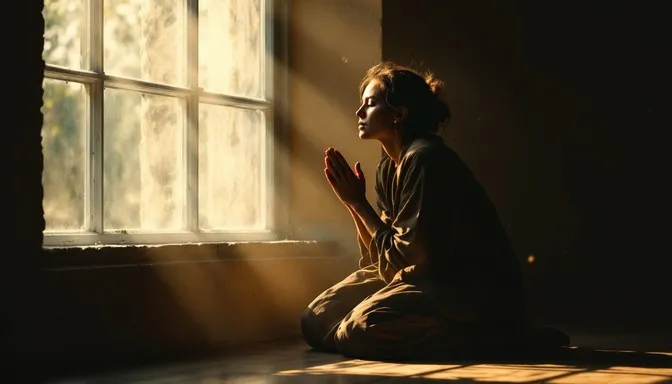
Before monastic wisdom can be applied to the loneliness crisis, a fundamental distinction must be drawn — one that the therapeutic culture tends to collapse. Loneliness and solitude are not the same thing. Isolation is an absence: the absence of connection, of being known, of belonging to something larger than the self. Contemplative solitude, by contrast, is a presence: the presence of God, of the self before God, of a silence that is full rather than empty.
The Desert Fathers and Mothers understood this distinction with great precision. Their withdrawal from the populated world was not a flight from relationship but a preparation for it — a stripping away of the noise that makes genuine encounter impossible. Francis of Assisi, who spent long periods in caves and hermitages, emerged from those seasons of solitude not as a recluse but as a man of extraordinary relational intensity, capable of encountering every human being and creature as a brother or sister.
Anglican monastic communities — the Society of Saint John the Evangelist, the Community of the Resurrection, and others — have maintained this understanding through their practice of the Daily Office. The Hours are not merely a devotional schedule. They are a structure of regular return: return to silence, return to Scripture, return to the ground of one's being in God. From that ground, authentic community becomes possible. Without it, community tends to become performance.
What the Rule of Life Offers a Congregation
One of the most transferable gifts of monastic tradition to the contemporary parish is the concept of a rule of life — a structured, intentional framework governing how time, relationships, prayer, work, and rest are ordered. In monastic communities, the rule is not experienced as a constraint on freedom but as a liberation from the tyranny of the immediate: the endless reactive scrolling, the performative busyness, the social obligations that exhaust without nourishing.
A growing number of Episcopal and Anglican parishes, drawing explicitly on Franciscan and Benedictine influences, are inviting their congregations to adopt communal rules of life — not identical prescriptions for every member, but a shared commitment to certain rhythms and practices that create the conditions for genuine encounter.
These might include: a commitment to gathering for prayer at specified times during the week, not only on Sundays; regular practices of shared meals in which conversation is structured to move beyond the superficial; accountability partnerships in which two or three members meet regularly to speak honestly about their interior lives; and deliberate practices of sabbath that create space for the kind of unhurried presence that friendship requires.
The key insight borrowed from monastic tradition is that community does not emerge spontaneously from proximity. It must be cultivated through structure. The monastery's bells that call the community to prayer at fixed hours are not interruptions of life; they are the architecture of a life worth living.
Intentional Solitude as a Community Practice
Counter-intuitively, one of the most powerful things a congregation can do to address loneliness within its membership is to teach its people how to be alone — well, fruitfully, and without anxiety. This is a distinctly Franciscan contribution to the conversation. The Franciscan tradition of hermitage, in which friars periodically withdrew from the active apostolate for extended periods of prayer, was not understood as a retreat from community but as its replenishment.
Several American parishes have begun offering what they call "desert days" — structured days of guided solitude, held on parish grounds or at nearby retreat centers, in which parishioners spend six to eight hours in silence, prayer, and simple manual work, with brief periods of shared reflection at the beginning and end. The theological framework offered is explicitly Franciscan: the desert is not empty; God speaks most clearly in what the noise of ordinary life drowns out.
Participants in these experiments report something that initially surprises them: they emerge from the day feeling more connected to their fellow parishioners, not less. Having been alone together — having shared the same silence, the same vulnerability, the same encounter with their own interior lives — they find that conversation afterward carries a different quality. The masks that social interaction typically demands have been, at least partially, set aside.
Structured Relationships: The Novitiate Model for the Parish
Perhaps the most radical proposal emerging from Franciscan-Anglican communities is the adaptation of the novitiate model for ordinary parish life. In religious orders, the novitiate is a structured period of formation in which new members are accompanied by experienced guides, introduced to the community's traditions and practices gradually, and given explicit permission to ask difficult questions and express genuine doubts.
Contrast this with the typical experience of joining an American congregation: a welcome packet, perhaps a newcomers' dinner, and then — membership. The assumption is that adults arrive already formed and need only to be incorporated into existing structures. The monastic tradition knows better. Formation takes time, requires accompaniment, and cannot be rushed without producing something shallow.
A handful of communities are now offering year-long formation programs for new members, modeled loosely on the novitiate, in which participants meet regularly with a spiritual director, engage in structured study of the community's theological and liturgical traditions, and are paired with experienced members who serve as informal guides. The explicit goal is not doctrinal instruction alone but the cultivation of the kind of honest, sustained relationship in which loneliness cannot easily take root.
The Desert Is Not Far
The monastic traditions that Franciscan and Anglican spirituality carry are not relics of a pre-modern world irrelevant to contemporary American life. They are, in many respects, precisely calibrated responses to the conditions that produce loneliness: the fragmentation of time, the commodification of relationship, the loss of shared narrative, the absence of structures that demand and enable genuine presence.
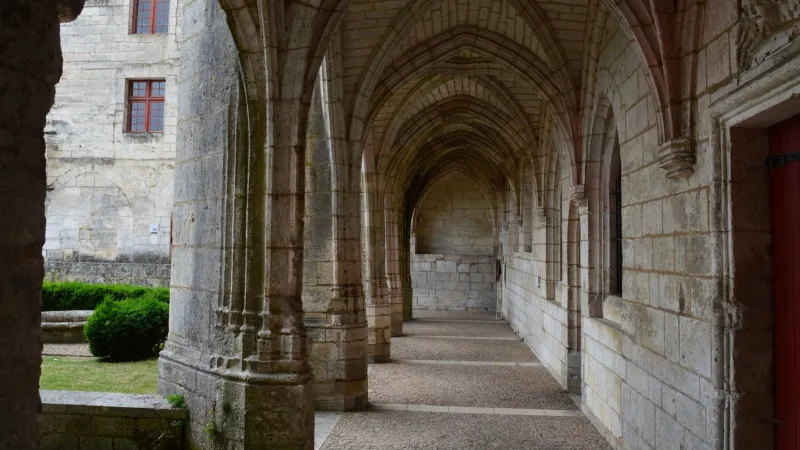
The desert the early monastics entered was not a geographical location so much as a decision — a decision to stop running from the silence and to discover what lives within it. That decision is available to any congregation willing to take it seriously. The monastery at the edge of the crowd has never closed its gates.