Faithful to the Few: Why Small, Particular Communities Are the Franciscan-Anglican Answer to the Church of the Algorithm
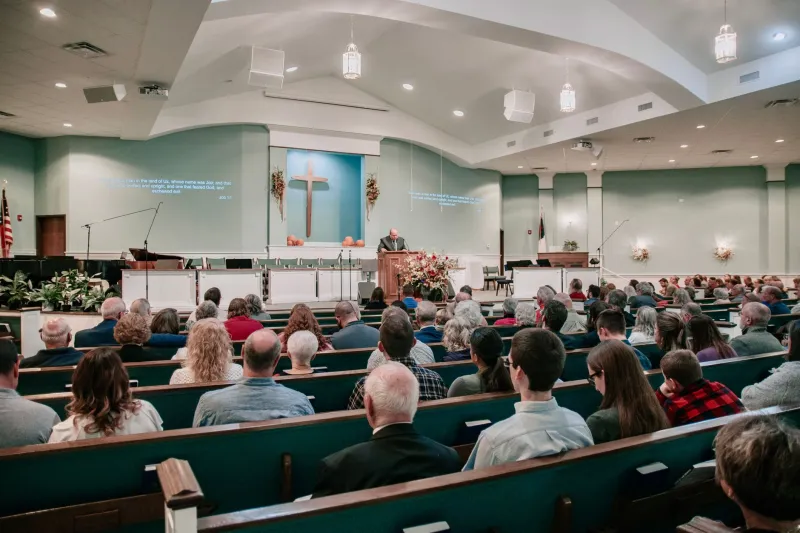
There is a particular kind of anxiety that has settled into the bones of American Christianity. It shows up in vestry meetings and ministry planning sessions, in the quiet dread that follows a Sunday morning when the pews are less full than they were a decade ago. It drives pastors to study the growth strategies of megachurches in Houston and Phoenix, and it sends religious communities scrolling through social media analytics in search of some formula that might translate ancient faith into contemporary reach. The anxiety has a name, though we rarely speak it plainly: we have confused scale with faithfulness.
Two traditions—one born in the dusty hillsides of thirteenth-century Umbria, the other forged in the theological and political upheavals of sixteenth-century England—have something urgent to say to this moment. Neither Franciscan spirituality nor Anglican ecclesiology was designed for viral distribution. Both were built for something slower, stranger, and more demanding: genuine presence to a particular people in a particular place.
The Particular as Sacrament
Francis of Assisi did not set out to build a movement. He set out to rebuild a church—one stone at a time, beginning with San Damiano. The particularity of that beginning was not incidental; it was constitutive. Francis responded to the leper he could see, the stone wall he could touch, the brothers who gathered around him with names and histories and difficult personalities. The breadth of the Franciscan movement that followed was a consequence of that rooted particularity, not a replacement for it.
Anglicanism, for its part, developed an ecclesiology centered on the parish—a geographic unit of belonging that assumed you were responsible to and for the people who happened to live near you. The parish system was, in its original conception, profoundly anti-consumerist. You did not choose your congregation based on the quality of the music or the charisma of the preacher. You belonged to a place, and the people of that place belonged to you.
Both visions share a common theological conviction: that God is encountered not in the abstract multitude, but in the concrete neighbor. The particular is not a limitation of the universal; it is its only honest expression.
What the Algorithm Demands
The logic of contemporary digital culture runs in precisely the opposite direction. Platforms reward breadth over depth, novelty over fidelity, and reach over rootedness. A sermon that moves ten thousand strangers to click a heart icon is legible to the algorithm in ways that thirty years of faithful pastoral presence in a single congregation is not. The church, increasingly, has learned to speak the algorithm's language—and in doing so, has begun to forget its own.
This is not a criticism leveled only at evangelical megachurches or prosperity gospel ministries, though the critique applies there with particular force. Mainline communities, including many Anglican parishes and Franciscan-affiliated congregations, have absorbed the same anxieties. The question "How do we grow?" has quietly displaced the question "How do we remain faithful?" as the organizing concern of religious life.
Franciscan communities in the United States are noticing this drift and, in some cases, deliberately resisting it. Several Third Order Franciscan chapters have recently chosen to remain intentionally small—capping membership not from exclusivity but from a conviction that genuine fraternal accountability requires knowing one another's actual lives. One chapter leader in the Midwest described the decision this way: "When we grew past a certain size, we stopped being a community and started being an audience. We had to choose which one we wanted to be."
Anglican Parish Life as Countercultural Act
Similar conversations are unfolding in Episcopal and Anglican Church in North America parishes across the country. A number of smaller congregations that might once have pursued merger or growth campaigns have instead chosen to embrace their scale as a spiritual discipline in itself. The intimacy of a small parish—where the priest knows which members are struggling financially, which families are grieving, which teenagers are quietly losing their faith—becomes, in this framing, not a problem to be solved but a gift to be stewarded.
The Anglican theological tradition has resources for this reframing. Richard Hooker's insistence that the church is always embodied in particular communities, and not merely in abstract doctrinal propositions, provides a foundation for valuing the local congregation as an end in itself. The daily office, prayed by a handful of faithful people in a drafty nave on a Tuesday morning, is not a lesser form of worship than the stadium praise event. It may, in fact, be the more honest one.
Presence as Proclamation
What both traditions are recovering, in their best contemporary expressions, is an understanding of Christian witness that does not require an audience. Presence is proclamation. The Franciscan friar who spends twenty years accompanying the poor in a single urban neighborhood has not failed to scale his ministry; he has understood what ministry actually is. The Anglican deacon who shows up every week to lead Evening Prayer for eleven elderly parishioners is not managing decline; she is practicing resurrection.
This is not romanticism about smallness for its own sake. There are small communities that are merely insular, and large communities that are genuinely hospitable and transformative. Scale itself is morally neutral. What is not neutral is the assumption—so pervasive in American religious culture—that bigger is closer to faithful, that reach is a proxy for righteousness.
Franciscan and Anglican thought together suggest a different measure: Are you showing up for the people in front of you? Are you accountable to a real community with real names and real needs? Are you willing to be known, and to know, in the slow and unglamorous way that genuine Christian life demands?
The Courage to Stay Small
There is courage required in this posture. In a religious culture that celebrates the church planter who launches campuses in three cities, the decision to invest deeply in one congregation or one neighborhood or one rule of life can feel like settling. It requires a theological conviction strong enough to resist the social pressure that equates visibility with virtue.
Both Franciscan and Anglican traditions have, at their core, a suspicion of that equation. Francis stripped himself of wealth and status precisely to resist the logic of accumulation. Anglican comprehensiveness, at its best, has always made room for the quiet and the local alongside the grand and the cathedral.
The church that America most needs right now may not be the one that reaches the most people. It may be the one that stays—that learns, in the Franciscan phrase, to be a lesser brother to whoever stands before it, and that embodies, in the Anglican sense, the patient, particular love of a God who chose to be born in one specific place, to one specific family, at one specific and unrepeatable moment in history.
That specificity was not a limitation of the Incarnation. It was the whole point.